 how-to
What Happens If Mediation Fails in Maryland Divorce
Table of Contents
- What Happens When Divorce Mediation Does Not Result in Agreement
- How to Prepare for Divorce Mediation to Avoid Failure
- Understanding Partial Settlement in Divorce Mediation
- What Happens After Divorce Mediation Fails
- Divorce Mediation vs. Litigation in Maryland
- Next Steps After an Impasse: Filing for Court Intervention
- Conclusion
- Frequently Asked Questions
Last Updated: October 12, 2026
What Happens When Divorce Mediation Does Not Result in Agreement
When divorce mediation fails to produce a settlement, the process does not simply end. Instead, unresolved issues move forward through other legal channels. Understanding what happens if mediation fails in Maryland divorce is critical for anyone facing this situation.
Mediation is a voluntary process where a neutral third party helps spouses negotiate. When mediation does not work, neither spouse is obligated to continue. The session simply concludes. But the divorce itself does not stop.
At The Law Office of Thomas K. Mallon, LLC, we help clients understand their options when mediation reaches an impasse. Some spouses choose to try again. Others move directly to litigation. A few explore alternative approaches first. The path forward depends on your specific circumstances and what issues remain unresolved.
Key points to understand:
- Mediation failure does not mean divorce is impossible
- Issues that were agreed upon remain settled
- Unresolved matters will be decided by a judge or through another process
- You have multiple options for moving forward
How to Prepare for Divorce Mediation to Avoid Failure
The best way to handle mediation failure is to prevent it. Strong preparation increases the chances of reaching agreement.
Organize your financial information before mediation starts. Gather tax returns, bank statements, retirement account statements, and property deeds. Mediators need clear data to help both spouses understand what you own and owe.
Be clear about your priorities. Decide which issues matter most to you. Custody arrangements, the family home, retirement accounts, and child support are often the biggest concerns.
Manage your emotions. Mediation works best when both spouses can talk without anger or blame. A mediator cannot force agreement, but they can help keep conversations productive.
Hire an attorney to review any agreement before signing. An attorney can spot problems you might miss. They can also advise you on whether a proposed settlement is fair under Maryland law.
Bring realistic expectations. Mediation rarely gives either spouse everything they want. Both sides typically give up something. If you expect a perfect outcome, you will be disappointed.
Common reasons mediation fails:
- One spouse is unwilling to negotiate in good faith
- Major disagreements exist on custody or property division
- Financial information is incomplete or hidden
- One spouse feels pressured or unsafe
- The mediator is not a good fit for the couple's dynamic
Understanding Partial Settlement in Divorce Mediation
Documenting Issues You've Already Agreed On
Many couples reach partial agreement during mediation. You might agree on child support but disagree on custody. Or you might settle property division but struggle with spousal support.
Partial agreements are valuable. Do not discard them if mediation fails. These settled issues should be documented in writing before mediation ends.
Ask the mediator to prepare a summary of what you both agreed to. This document protects both spouses. It shows which issues are settled and which are not. Later, when you go to court, the judge will not need to decide settled matters.
Get your agreement in writing immediately. Do not rely on memory. Written documentation prevents disputes later. The mediator can help draft this summary, or your attorney can do it.
A partial settlement agreement should include:
- Issues that both spouses agreed to
- Specific terms of each agreement
- Dates and amounts if money is involved
- Both spouses' signatures and the mediator's signature
Confidentiality and What Can Be Used in Court
One key protection in mediation is confidentiality. What you say during mediation is generally private. This rule encourages honest discussion.
Mediation communications are confidential in Maryland. This means statements made during mediation cannot be used as evidence in court later. You can speak freely without worrying that your words will be used against you.
However, confidentiality has limits. If you reach an agreement, that agreement is not confidential. It becomes a binding contract. Both spouses can enforce it in court.
Statements about facts are also not protected by confidentiality. If you admit to owning a specific asset or earning a certain income, that fact can be used in court even though you mentioned it in mediation.
Understand what stays private:
- Offers and counteroffers during negotiation
- Statements about your feelings or concerns
- Hypothetical discussions about possible settlements
- Admissions made during mediation sessions
What can be used in court:
- The final settlement agreement itself
- Facts about assets, income, or debts
- Information you provide in writing to the mediator
What Happens After Divorce Mediation Fails
Deciding Whether to Try Mediation Again
When mediation ends without full agreement, you have choices. One option is to try mediation a second time.
Many couples benefit from a second mediation attempt. Time often helps. After the first session, spouses may reconsider their positions. New information may emerge. Emotions may settle. A second mediator might also have a different approach that works better for your situation.
Ask yourself these questions before trying again:
- Have circumstances changed since the first mediation?
- Is there new information that might help negotiations?
- Are both spouses willing to try again?
- Would a different mediator be helpful?
- Do unresolved issues feel closer to resolution?
If the answer to most of these is yes, a second mediation session makes sense. If one spouse is completely unwilling to negotiate, or if fundamental disagreements remain unchanged, mediation again may waste time and money.
Timing matters. Do not rush back into mediation immediately. Allow a few weeks for emotions to cool and for new information to surface. But do not wait months. The longer issues sit unresolved, the more expensive your divorce becomes.
Exploring Alternatives Before Litigation
Litigation is expensive and time-consuming. Before going to court, consider other options.
Collaborative divorce brings both attorneys and neutral experts into the process. Each spouse has a lawyer. Both sides agree to work toward settlement without going to court. If the process fails, both attorneys must withdraw, and new attorneys take over for litigation. This structure encourages settlement because switching attorneys is costly and disruptive.
Schedule Your Free Consultation →
Arbitration is like private court. A neutral arbitrator hears both sides and makes a binding decision on unresolved issues. Arbitration is faster than court and more private. But the arbitrator's decision is final. You cannot appeal it.
Negotiation through attorneys can work if mediation fails. Your attorney talks directly with your spouse's attorney. Sometimes lawyers can reach agreement when spouses cannot talk directly. This approach costs less than court but more than mediation.
Parenting coordinators help with custody and visitation disputes specifically. If your main disagreement is about parenting arrangements, a parenting coordinator might resolve the issue without going to court.
Alternative options comparison:
| Option | Cost | Speed | Privacy | Finality |
|---|---|---|---|---|
| Second Mediation | Low | Fast | Private | Not binding |
| Collaborative Divorce | Medium | Medium | Private | Binding if agreed |
| Arbitration | Medium | Fast | Private | Binding |
| Attorney Negotiation | Medium | Medium | Private | Binding if agreed |
| Litigation | High | Slow | Public | Binding |
Divorce Mediation vs. Litigation in Maryland
How a Judge Decides Unresolved Issues
If mediation fails and you cannot reach agreement another way, a judge will decide. Understanding how judges approach divorce issues helps you prepare.
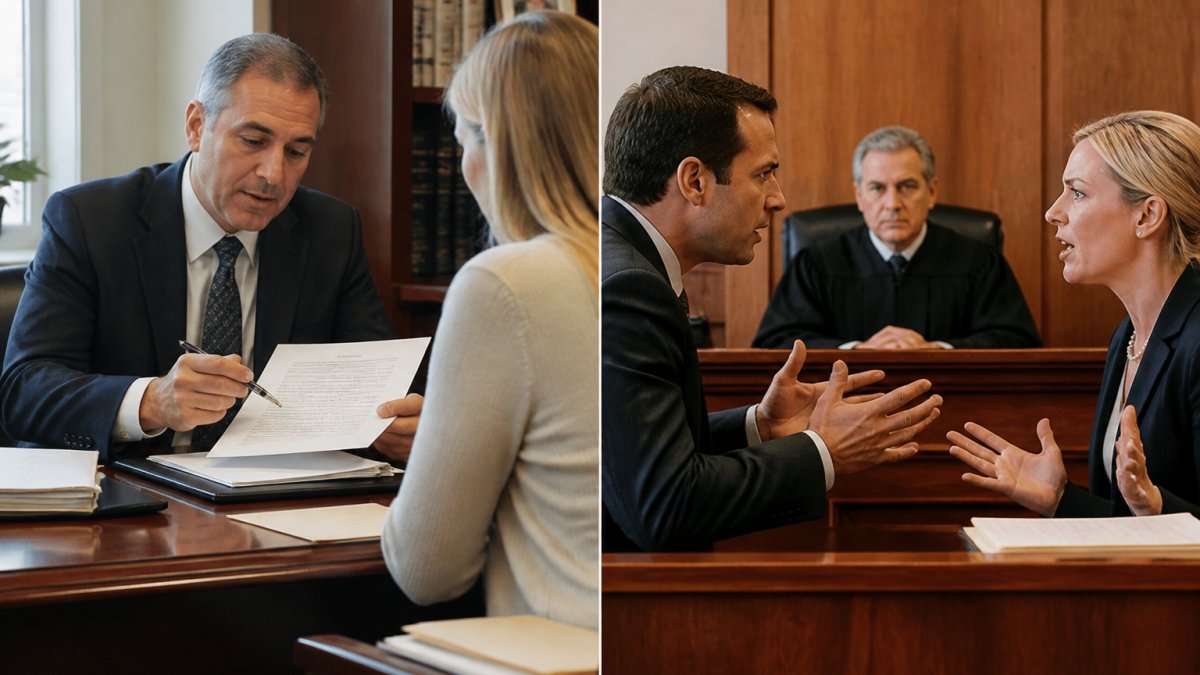
Judges apply Maryland law to your situation. Maryland courts look at specific factors when deciding custody, support, and property division.
For custody and visitation, Maryland courts consider the best interest of the child.
For property division, Maryland is an "equitable distribution" state. This does not mean equal. It means fair.
For child support and spousal support, Maryland has guidelines. The judge calculates support based on both spouses' incomes and the custody arrangement.
Judges consider evidence presented at trial. Both spouses can present documents, witnesses, and testimony. The judge weighs all evidence and makes a decision. This decision is binding.
Timeline and Cost Differences
Mediation and litigation have very different timelines and costs.
Mediation is faster. A mediation session typically takes one to three hours. If you reach agreement, you are done. The entire process from start to finish might take weeks or a few months. You control the schedule.
Litigation takes much longer. Court schedules are crowded. There are waiting periods between filing and trial. Discovery (exchanging information) takes time. Depositions (questioning the other party under oath) take time. A contested divorce trial can take months or even years from start to finish.
Mediation costs less. Mediators charge hourly rates. A few sessions might cost a few hundred to a few thousand dollars. You split the mediator's fee with your spouse.
Litigation costs significantly more. Your attorney charges hourly. Court filing fees add up. Expert witnesses (for property valuation, custody evaluation, or other issues) are expensive. A contested trial can cost tens of thousands of dollars or more, depending on complexity.
Time and cost trade-offs:
- Mediation: weeks to months, lower cost, both spouses control outcome
- Litigation: months to years, high cost, judge controls outcome
Next Steps After an Impasse: Filing for Court Intervention
When mediation fails and other alternatives do not work, you file for court intervention. This process starts your divorce case in court.
File a complaint for divorce in the District Court or Circuit Court. The filing includes information about you, your spouse, and your children.
Your spouse receives a copy of the complaint. They have a set time to respond. If they do not respond, you may be able to proceed without them, but this is rare.
Discovery happens next. Both sides exchange financial documents, property information, and other evidence. You may answer written questions (interrogatories) or attend a deposition where you answer questions under oath.
A trial date is set. If you and your spouse do not reach agreement before trial, the judge will hold a hearing. Both sides present evidence. The judge makes decisions on unresolved issues.
The judge issues an order. This order covers custody, support, and property division. It is binding. You must follow it.
Steps after mediation fails:
- Decide to pursue court intervention or try another alternative
- Hire an attorney if you have not already
- File a divorce complaint
- Respond to your spouse's complaint if they file first
- Participate in discovery
- Attend trial or reach settlement before trial
- Receive the judge's order
Conclusion
When what happens if mediation fails in Maryland divorce becomes your reality, you have options. Mediation failure does not mean your divorce is impossible or that you have lost your voice in the process. Partial agreements stay in place. You can try mediation again. You can explore alternatives like collaborative divorce or arbitration. Or you can move to litigation and let a judge decide.
The Law Office of Thomas K. Mallon, LLC has helped families navigate this exact situation for over 25 years. We provide clear guidance on your options, protect your rights, and develop personalized strategies for whatever comes next. Whether you are considering mediation, facing a failed session, or preparing for court, we are here to help. Schedule your free consultation today to discuss your situation and understand your path forward.
Frequently Asked Questions
What happens if divorce mediation fails in Maryland?
If mediation fails to resolve all issues, you can pursue litigation by filing a complaint in the district or circuit court in your county. A judge will then decide any unresolved matters, including property division, custody, and support. Any partial agreements reached during mediation can still be incorporated into the final settlement agreement, so progress made is not lost.
Can you still settle a divorce after mediation fails?
Yes. Failed mediation does not prevent future settlement. You can attempt mediation again with a different mediator, negotiate directly with your spouse's attorney, or pursue collaborative divorce. Many couples reach agreements outside of mediation even after an initial impasse. Settlement at any stage before trial avoids the cost and emotional strain of a full court hearing.
How should you prepare for divorce mediation to avoid failure?
Gather all financial documents, clarify your priorities for custody and assets, and be realistic about what you can compromise on. Discuss your goals with a family law attorney beforehand so you understand your legal rights and options. Approach mediation with willingness to negotiate, inflexibility is a common reason mediation fails. Consider whether unresolved emotional conflict or safety concerns make mediation unsuitable before you begin.
Does failed mediation mean you have to go to trial?
No. Failed mediation does not automatically lead to trial. You have several options: try mediation again, pursue collaborative divorce, negotiate through attorneys, or file for court intervention. Many cases settle through negotiation even after mediation ends. Trial is a last resort when settlement is impossible and a judge must decide the remaining issues.